
Pakistan’s 2026 5G Spectrum Auction Explained
The wait is finally over. Pakistan has officially stepped into the next generation of mobile connectivity. The Pakistan Telecommunication Authority (PTA) successfully wrapped up the highly anticipated 5G spectrum auction between March 10 and 12, 2026. This monumental event lays the foundation for a massive digital shift across the nation.
If you are wondering what this means for your daily internet speeds, the local economy, or your current mobile network, you are in the right place. This guide breaks down the complete auction results, explains how the frequency bands were distributed, and explores what the future holds for 5G rollout in Pakistan.

Understanding the PTA 5G Spectrum Auction
A spectrum auction is simply the method governments use to sell the rights to transmit signals over specific electromagnetic bands. To make 5G a reality, telecom operators need access to these specific radio frequencies.
During this event, the PTA put a massive 597.2 MHz of spectrum up for grabs. These frequencies were spread across six distinct bands, each serving a unique purpose for mobile connectivity:
To guarantee a fair and transparent process that met global standards, the PTA partnered with NERA Economic Consulting to oversee the bidding procedures.
Which Telecom Companies Joined the Bidding?
The competitive landscape of Pakistan’s telecom sector was on full display. Three major players qualified for the auction and actively bid for the new frequencies:
Noticeably absent from this list was Telenor Pakistan. The company opted out of the bidding process entirely. This unexpected move leaves many Telenor subscribers curious about the network’s future strategies. For now, Telenor users will continue to rely on existing 4G and LTE services, as a 5G upgrade from the provider does not appear to be on the immediate horizon.
Complete 5G Auction Results and Spectrum Allocation
The bidding took place in two primary phases: allocation and assignment. Together, these stages determined exactly how much spectrum each company received and where those frequencies are located on the radio dial.
Total Spectrum Secured by Operators
On March 10, 2026, the allocation stage concluded after three intense rounds of bidding. Out of the 597.2 MHz available, 480 MHz was successfully sold.
Breakdown of the 2600 MHz and 3500 MHz Bands
The assignment stage, finalized on March 12, locked in the specific frequency positions. The most critical bands for urban 5G and lightning-fast speeds are 2600 MHz and 3500 MHz.
In the 2600 MHz Band, Jazz claimed 70 MHz, while both Ufone and Zong took home 60 MHz each.
The 3500 MHz Band is widely considered the crown jewel of 5G technology globally. Ufone made a highly aggressive play here, securing a massive 120 MHz. Jazz and Zong each acquired 50 MHz, leaving 60 MHz unsold. Ufone’s bold acquisition in this band gives them a distinct advantage for delivering premium, high-speed 5G services in the future.
Financial Impact: Revenue Generated for Pakistan
This technological leap also brought a massive financial boost to the national treasury. The three telecom giants collectively injected $509.6 million (roughly PKR 142.6 billion) into the economy.
Transparency and Government Backing
The entire bidding process was celebrated for its strict adherence to transparency. The PTA utilized a highly secure Electronic Auction System (EAS), allowing operators to place bids remotely. Results for every round were broadcast live on Pakistan Television (PTV) and updated in real-time on the official PTA website.
Top government leaders attended the event, signaling the national importance of this digital milestone. Officials in attendance included Finance Minister Muhammad Aurangzeb, IT Minister Shaza Fatima Khawaja, and PTA Chairman Major General (R) Hafeez Ur Rehman.
Government representatives stressed that the primary goal of this auction was not simply to maximize immediate profits. Instead, the policies were intentionally crafted to encourage long-term infrastructure investment, ensuring advanced digital services eventually reach all citizens.
Zero Right of Way (RoW) Charges: What It Means
One of the most exciting regulatory announcements tied to the auction was the elimination of Right of Way (RoW) fees. Usually, telecom companies must pay hefty charges to install cell towers or lay fiber-optic cables on public land.
By dropping these charges to zero, the PTA has drastically lowered the cost of building new infrastructure. For consumers, this translates to a much faster rollout. Operators can now deploy their 5G towers rapidly without getting bogged down by expensive municipal fees.
Expected Timeline for 5G Launch in Pakistan
Now that the frequencies are distributed, the real work begins. Telecom providers are immediately shifting into the deployment phase. While exact dates will vary by operator, here is the anticipated timeline for the nationwide rollout:
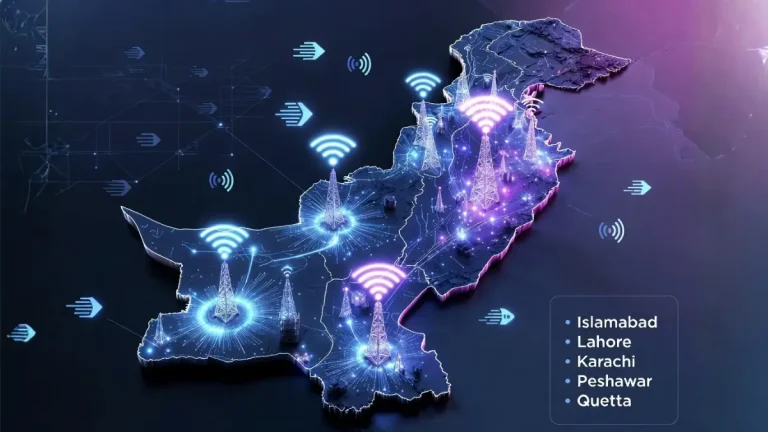
Residents in major cities like Karachi, Lahore, and Islamabad will likely be the first to experience these next-generation speeds, with coverage expanding to smaller cities shortly after.
Stay informed about the latest developments in 5G rollout and other telecom news by visiting our Updates category
How 5G Will Transform Pakistan’s Digital Landscape
The jump from 4G to 5G is about much more than just loading web pages faster. This technology will act as a catalyst for widespread economic and social development across Pakistan.
With speeds up to ten times faster than current networks and virtually zero latency, the possibilities are endless. Freelancers will enjoy seamless video conferencing and instant large file uploads. Remote healthcare will become highly reliable, allowing doctors to consult patients in rural villages via high-definition video. Furthermore, it paves the way for smart agriculture through connected farming sensors and boosts the manufacturing sector with automated, real-time industrial capabilities.
To explore the best internet packages for your needs, check out our detailed guide on Telenor Internet Packages
What You Need to Prepare for 5G
When the networks finally go live, your current phone setup might need a quick update. To tap into the new spectrum, you will require:
- A smartphone specifically built with a 5G-compatible modem.
- An upgraded 5G-enabled SIM card provided by your network operator.
- To physically be inside an active 5G coverage zone.
Network providers will release specific instructions on how to swap your current SIM card as the commercial launch dates approach.
Discover the latest Telenor Packages 2026 to make the most of your 5G experience
Frequently Asked Questions About Pakistan’s 5G Rollout
Which company acquired the most spectrum?
Jazz secured the highest total amount with 190 MHz. However, Ufone secured the largest chunk of the highly coveted 3500 MHz band (120 MHz).
Why did Telenor skip the 5G auction?
While no official statement has been released detailing their absence, industry experts suggest it stems from broader strategic business decisions or a desire to focus solely on optimizing their existing 4G infrastructure.
Will my current 4G connection stop working?
Absolutely not. 4G and 5G networks will operate simultaneously for many years. 5G will act as a premium overlay in specific areas, while 4G remains the robust backbone for the rest of the country.
When will the service actually be available to use?
Commercial availability is projected to kick off between late 2026 and early 2027, prioritizing the largest urban centers first.
Moving Forward into a Connected Future
Pakistan’s successful 2026 spectrum auction marks a defining moment in the nation’s technological journey. With Jazz, Ufone, and Zong heavily invested in the new digital frontier, the race to provide top-tier mobile services is officially underway. By prioritizing sustainable growth and slashing infrastructure taxes, the government has cleared the runway for a swift and effective network rollout. Keep an eye on your mobile provider’s updates in the coming months as Pakistan prepares to enter a faster, smarter, and highly connected era.
For more updates and insights on Pakistan’s telecom industry, visit my telenor answer today